
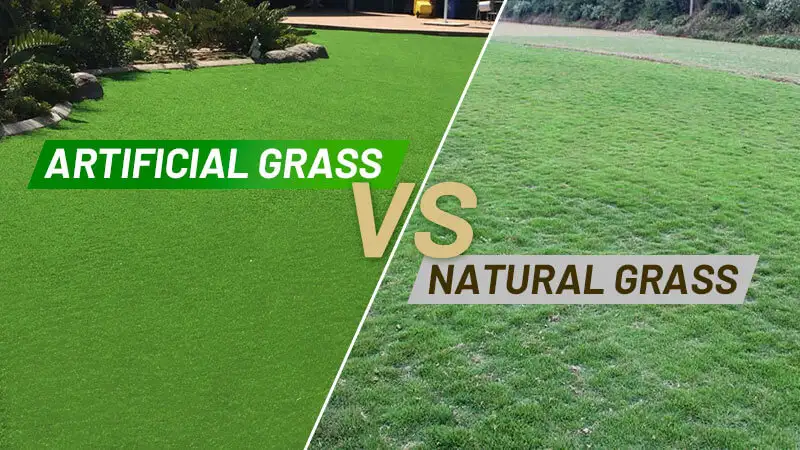

The question of whether: is AstroTurf is the same as artificial turf? The two terms have been used interchangeably for so long that the distinction seems almost pedantic. But for anyone responsible for a playing surface — whether at a professional stadium, a high school athletic facility, or a multi-use recreational complex — understanding the difference is practically valuable.
AstroTurf is a brand. Artificial turf is the category. The analogy that captures it well: Kleenex is a brand of facial tissue, and Band-Aid is a brand of adhesive bandage. Everyone uses the brand name to refer to the category, but the products behind those names are not identical to everything else in the category.
AstroTurf created the category it now competes in. The Houston Astrodome installation in 1966 was the first synthetic playing surface anywhere in the world. On March 21 of that year, when the Houston Astros faced the Los Angeles Dodgers in the first Major League Baseball game on a synthetic surface, the event received enormous television coverage. It introduced the concept — and the brand name — to millions of Americans simultaneously. For years, AstroTurf was the only widely visible name in the space. By the time other manufacturers entered the market and, eventually, 10 of 26 MLB teams were playing on artificial surfaces, the language habit was fixed. “AstroTurf” had become the word for everything in the category, regardless of who made it.
That history explains the confusion. It doesn’t make the products equivalent.
All artificial turf systems share a basic structure: synthetic fibers made from polyethylene, polypropylene, nylon, or blends; a backing that holds the fibers; infill material for cushioning and stability; and drainage infrastructure. Those basics are common across manufacturers. The quality and engineering applied to those components are not.
AstroTurf’s RootZone technology uses crimped nylon fibers in a three-dimensional sub-surface matrix that captures infill and prevents it from migrating. This keeps the playing surface performing consistently year after year rather than degrading unevenly as infill shifts and compacts. Research from Michigan State University identified this system as producing biomechanical characteristics that closely match natural grass, with reliable shock absorption across the full surface.
Is AstroTurf the same as artificial turf when it comes to fiber technology? The Trionic Plus system says otherwise. Combining nylon and polyethylene copolymers, it includes Sharkskin surface texturing for 30% lower skin friction; DualChill infrared-reflective shielding for 42% better temperature management; Statblock antistatic treatment that reduces static buildup by up to 17 times; and Sanitized antimicrobial protection for odor and hygiene control. These are integrated technologies, not afterthoughts.
Sport-specific engineering sets AstroTurf apart further. The Diamond Series for baseball uses different fiber specifications and pile heights in base paths versus outfield sections. Poligras hockey systems meet International Hockey Federation standards. A twelve-year partnership with the University of Tennessee’s Department of Turf Sciences validates product development through independent academic research.
Testing standards reflect the same quality difference. AstroTurf uses One Turf testing protocols aligned with FIFA, World Rugby, and FIH standards — the recognized high bar for synthetic surface evaluation. Many manufacturers test only to the minimum safety standards.
Is AstroTurf the same as artificial turf from an environmental standpoint? The company is the only USDA BioPreferred sports turf manufacturer. The Poligras Paris GT Zero system, used at the Paris 2024 Olympics, uses 80% bio-based materials from sustainably farmed Brazilian sugar cane, is carbon-neutral, and reduces CO2 emissions by approximately 73 tonnes per standard pitch. All current products are PFAS-free.
Lifespan projections also differ: generic systems typically last three to five years before significant performance degradation; AstroTurf systems are built for eight- to ten-year cycles.
Is AstroTurf the same as artificial turf in the broadest sense? Yes — it’s part of the category. In the sense that matters for a real purchasing decision, it’s in a different tier entirely.
