
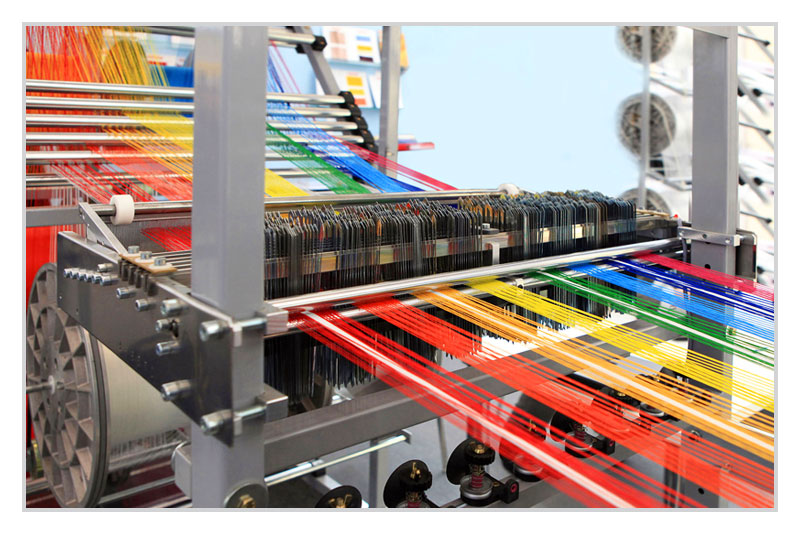

For generations, the global textile sector was defined in the public imagination by garment assembly, home furnishings, and fast-moving fashion trends. Yet behind the scenes of commercial manufacturing, an entirely different discipline has quietly matured. Known across manufacturing hubs as technical textiles, this branch of materials science is shedding its association with apparel to become a foundational driver of heavy industrial engineering.
Modern factories, aerospace hangars, civil works projects, and chemical refineries face unprecedented operating pressures. Components must withstand extreme thermal volatility, resist aggressive chemical exposure, bear multi-ton mechanical loads, and meet stringent lightweighting benchmarks. Traditional metals, solid polymers, and unreinforced ceramics are increasingly hitting their physical limits. In response, materials engineers are turning to advanced fibers, multi-dimensional weaving architectures, and functionalized nonwoven substrates to solve engineering bottlenecks that rigid materials can no longer address alone.
Reinventing Structural Mechanics with Multi-Axial and 3D Weaving
Traditional composite fabrication relied heavily on two-dimensional laminated plies. Technicians layered sheets of woven carbon or glass fiber impregnated with resin, curing them under heat and vacuum to form structural panels. While light and strong, these 2D laminates share a notorious structural weakness: delamination under transverse impact. When struck by road debris or subjected to cyclical mechanical shear, the resin between fiber planes can fracture, triggering catastrophic internal failure without visible surface damage.
Modern three-dimensional weaving and automated continuous braiding have largely eliminated this vulnerability. Advanced industrial looms can now route yarns along orthogonal axes simultaneously, interconnecting the through-thickness dimension directly with in-plane fibers.
The resulting preforms exhibit extraordinary interlaminar shear strength and energy absorption characteristics. In commercial aerospace and performance automotive chassis, three-dimensional woven composites offer superior strength-to-weight ratios while reducing structural component counts. Instead of bolting together dozens of machined aluminum brackets, engineers can co-cure unified, complex geometries that distribute torsional loads seamlessly across the entire fiber matrix.
Smart Textiles as Embedded Industrial Telemetry
Textiles are no longer passive structural elements; they are rapidly evolving into active sensory networks. By incorporating conductive polymer filaments, carbon nanotube yarns, and micro-capillary optical fibers directly into industrial weaves, manufacturers are turning structural fabrics into real-time monitoring tools.
Sensor Integration for Structural Health Monitoring
When applied to civil infrastructure or renewable energy installations, sensory textiles act as early-warning diagnostics for asset degradation.
-
Embedded fiber-optic yarns inside utility-scale wind turbine blades continuously measure localized strain, detecting internal delamination or aerodynamic micro-fractures hundreds of hours before visual inspection could spot them.
-
Smart geotextile liners installed beneath railway beds and highway embankments track moisture migration and localized subsidence, alerting municipal maintenance teams before roadbeds collapse.
-
Reinforced chemical transfer hoses woven with conductive carbon threads trigger automatic system shutdowns the moment an internal puncture or dielectric shift indicates line erosion.
By transforming structural reinforcements into continuous diagnostic platforms, industrial operators can shift their maintenance models away from rigid, calendar-based inspections and toward predictive asset reliability.
Nanofiber Nonwovens and High-Efficiency Industrial Filtration
Beyond high-strength structural preforms, advanced textiles are making profound contributions at the molecular scale through electrospun nonwovens. In aggressive chemical processing, semiconductor fabrication, and heavy particulate capture, conventional filter papers and woven meshes frequently choke when tasked with capturing sub-micron contaminants.
Electrospinning utilizes high-voltage electrostatic fields to draw polymer solutions into continuous fibers measuring mere nanometers in diameter. Deposited randomly onto permeable carrier substrates, these ultrafine fibers form dense, web-like matrices with immense surface-area-to-volume ratios and uniform pore distributions.
In heavy manufacturing facilities, nanofiber filter media capture particulate matter with sub-micron precision while maintaining minimal airflow resistance. Unlike thick membrane alternatives that choke industrial blowers and drive up factory electricity usage, electrospun nonwovens provide high capture efficiency with remarkably low pressure drop. In industrial effluent treatment, functionalized nanofibers can be chemically grafted with specific chelating compounds to capture dissolved heavy metals from wastewater streams, allowing processing plants to recover valuable catalytic materials while adhering to zero-liquid-discharge mandates.
Geotextiles and the Reinforcement of Civil Infrastructure
Civil engineering projects are historically vulnerable to environmental fatigue. Heavy transport corridors, earthworks embankments, and commercial foundations inevitably settle, shift, and degrade when exposed to chronic water saturation and uneven subsurface loading.
Modern high-tenacity geotextiles, engineered from high-modulus polypropylene and polyester yarns, have fundamentally modernized soil stabilization and subgrade design. Rather than relying solely on meters of imported gravel or expensive concrete retaining structures, engineers place engineered planar fabrics directly between soil layers.
These specialized textiles fulfill multiple distinct functions simultaneously: they separate soil fractions to prevent subgrade contamination, distribute wheel loads across wider surface areas to suppress rutting, and provide planar conduits for subsurface drainage without washing away fine soil particles. Incorporating these materials into asphalt overlays helps arrest reflective cracking, significantly extending the service life of interstate transport corridors and reducing the lifecycle cost of municipal highway networks.
The Shift Toward Thermoplastic Chemistry and Monomaterial Recyclability
As technical textiles take on greater structural duties, end-of-life reclamation has emerged as a serious operational obstacle. Historically, high-performance composites bonded specialized fibers to irreversible thermoset epoxy resins. Once cured, these structures could not be remelted, leaving decommissioned components bound for incinerators or industrial landfills.
The technical textile sector is resolving this hurdle by accelerating the development of thermoplastic matrix systems and single-polymer composites. Often engineered as flexible organosheets, these materials combine high-strength reinforcing fibers with compatible thermoplastic matrices, such as polyphenylene sulfide or polyether ether ketone.
Because the matrix can be melted and reformed repeatedly, thermoplastic composites drastically shorten manufacturing cycle times via rapid thermoforming while offering a viable path toward mechanical recycling. Furthermore, monolithic textiles—where both the structural fiber and the surrounding matrix derive from the identical polymer chemistry—can be reground and reprocessed at the end of their operational lifecycle without labor-intensive resin separation.
From deep-sea umbilical cables and high-altitude aerodynamic fairings to subgrade stabilization and micro-filtration arrays, advanced textiles have established themselves as an indispensable branch of modern industrial materials science. The intersection of sophisticated weaving machinery, nanoscale surface modification, and functional polymer chemistry has transformed flexible fibers into some of the most resilient engineering materials available. As industries continue to balance demands for structural strength, operational telemetry, and lower material footprints, technical textiles will remain central to the architecture of modern industrial manufacturing.
